Two currencies
Step-by-step manual
01The business question
Q-Expert Distributors sells in pesos and in dollars. Every sale must be valued in pesos with the exchange rate that was valid on its own date, and placed in an amount band. On the way, capture errors and discontinued products have to leave the analysis.
02Before you start
- Unzip the episode package:
ExchangeRates.csv,AmountBands.csv, the files of the previous episodes andstart.qep(episode 3's end). Add the two new files to the Library. - Import
start.qepwith Import QEP. First, delete episode 3's debugging CHECKPOINT afterCustomer: it stops the reload there. - Want to check the rates before modeling? Open
ExchangeRates.csvin Q-Explorator, the Q-Fábrica team's desktop tool: every row is a currency with a validity range.
03Step by step
-
1
Clean the sales
Add a TXF
tmp_Salesaftertmp_SalesRaw. On Expressions:Date(Date#(SaleDate, 'YYYY-MM-DD'))asSaleDateApplyMap('map_CustomerSurvivor', CustomerID, -1)asCustomerIDApplyMap('map_ChannelName', Channel, 'Other')asChannelNameQuantity * UnitPrice * (1 - DiscountPct / 100)asNetAmount
Turn on WHERE with
Quantity > 0. Then DROPtmp_SalesRaw.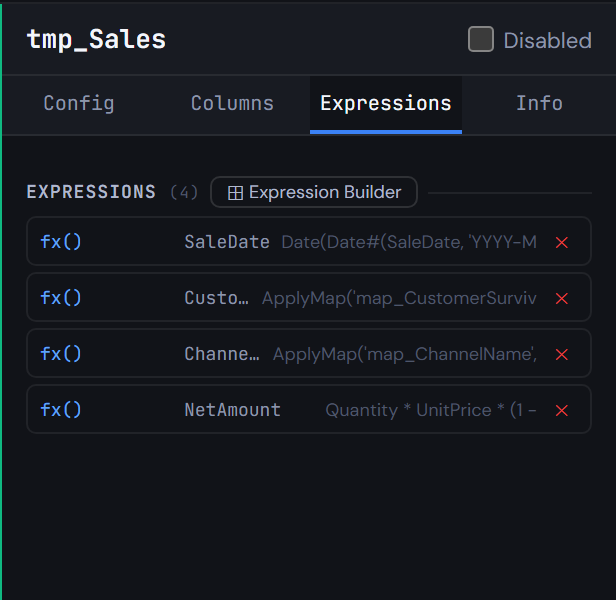
Figure 4.1 — Clean the sales -
2
Keep only active products
Add a JOIN node, operation
INNER JOIN, betweenProduct(only itsProductID) andtmp_Sales. Sales of discontinued products leave the analysis.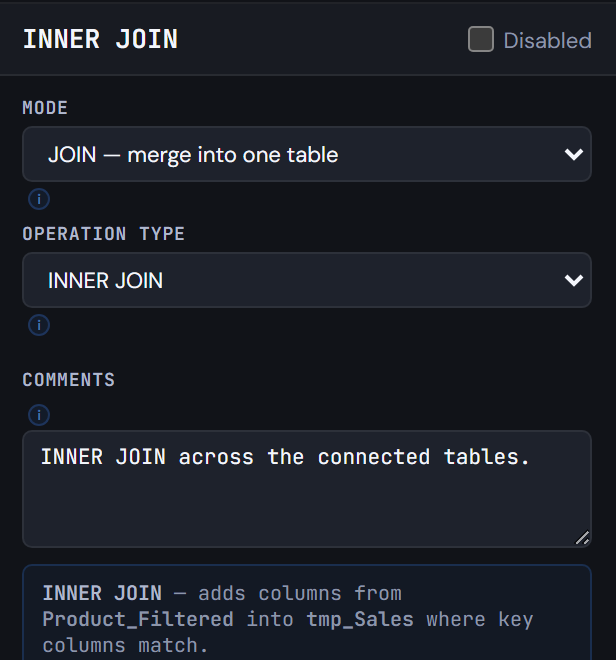
Figure 4.2 — Keep only active products -
3
Find each sale's valid rate
Load
ExchangeRates.csvastmp_ExchangeRate, withDate#(…, 'YYYY-MM-DD')onValidFromDateandValidToDate. Then add an INTERVALMATCHtmp_RateBridge:- Match field
SaleDate - Start
ValidFromDate, endValidToDate - Additional key
Currency
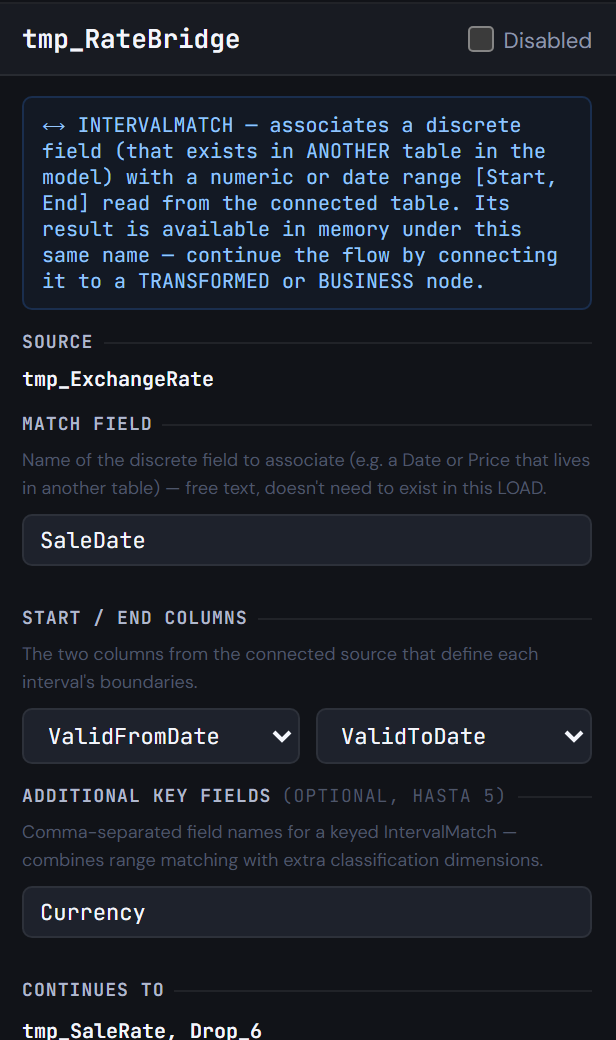
Figure 4.3 — Find each sale's valid rate - Match field
-
4
Bring the rate into the sales
Three nodes and a cleanup:
- A TXF
tmp_SaleRate(NoConcatenate) reads the bridge. - A LEFT JOIN adds
Rateto it fromtmp_ExchangeRate. - A second LEFT JOIN brings
SaleDate, Currency, Rateintotmp_Sales, with the WHERECurrency <> '$(vBaseCurrency)'. - A DROP of the three work tables.
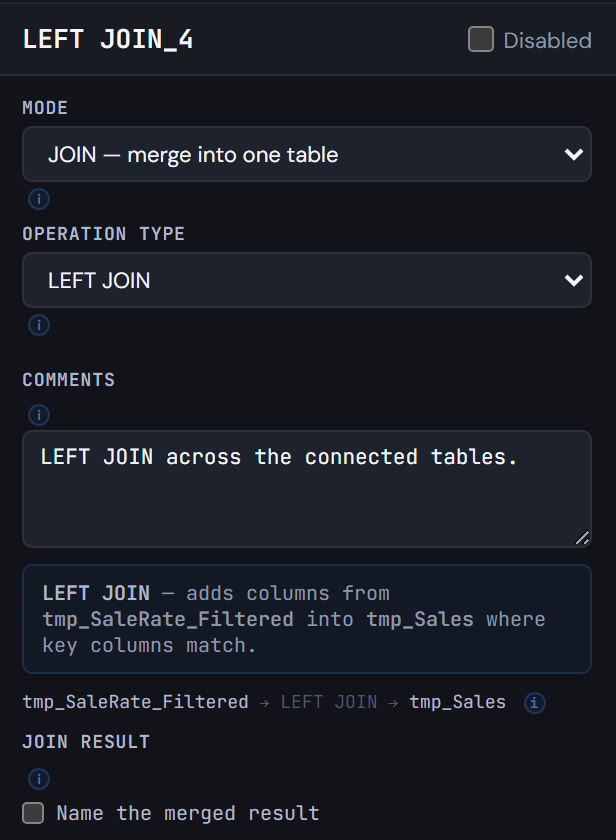
Figure 4.4 — Bring the rate into the sales - A TXF
-
5
Value every sale in pesos
A TXF
Sales(NoConcatenate) readstmp_Salesand addsRound(NetAmount * Alt(Rate, 1))asNetAmountCOP. Then DROPtmp_Sales.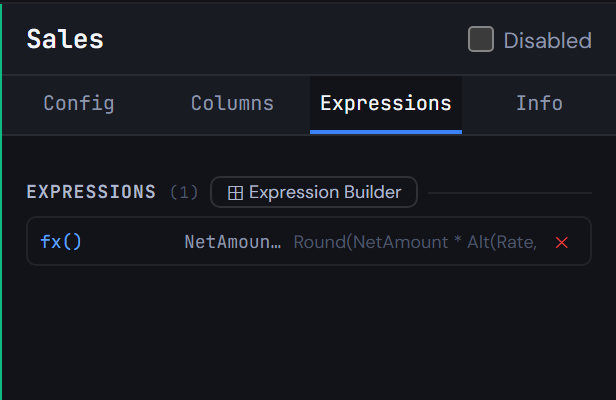
Figure 4.5 — Value every sale in pesos -
6
Place each sale in an amount band
The same pattern again:
tmp_AmountBandfromAmountBands.csv.- An INTERVALMATCH
tmp_BandBridgeonNetAmountCOPbetweenFromAmountandToAmount. - A bridge
tmp_SaleBandwith the band joined in. - A LEFT JOIN of
AmountBandintoSales. - A DROP of the work tables and of the field
SourceFile.
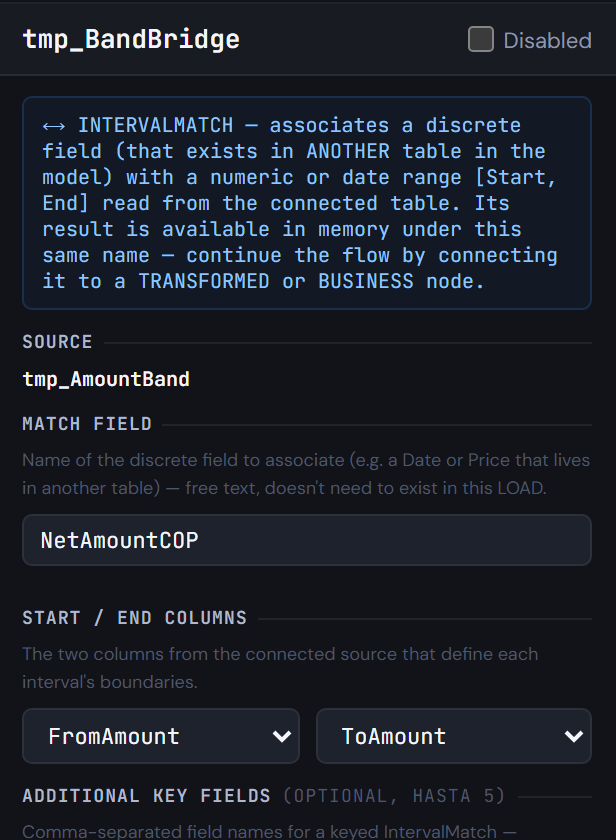
Figure 4.6 — Place each sale in an amount band -
7
Store the sales, then stop and look
Two checkpoints after
Sales:- STORE to
$(vTxfPath)Sales.qvd: the Transform layer's sales table. - A debugging one that stores
$(vTxfPath)Sales_Check.qvdwith Exit Script ticked, so the reload stops while you check the sales.
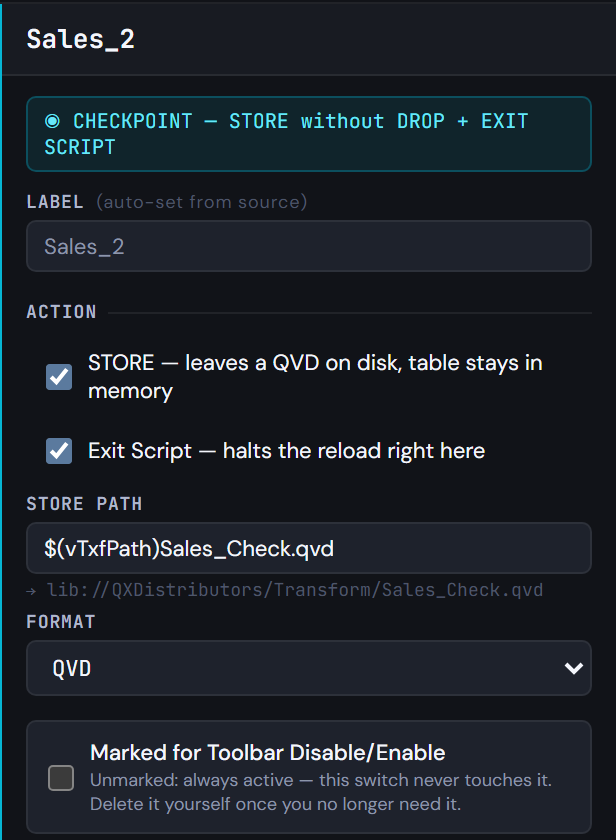
Figure 4.7 — Store the sales, then stop and look - STORE to
-
8
Generate the script
Generate Syntax. The mapping tables load first; the last tab ends with the work tables dropped,
DROP FIELD SourceFile,STORE [Sales] INTO …Sales.qvdand the debuggingSTORE+EXIT SCRIPT.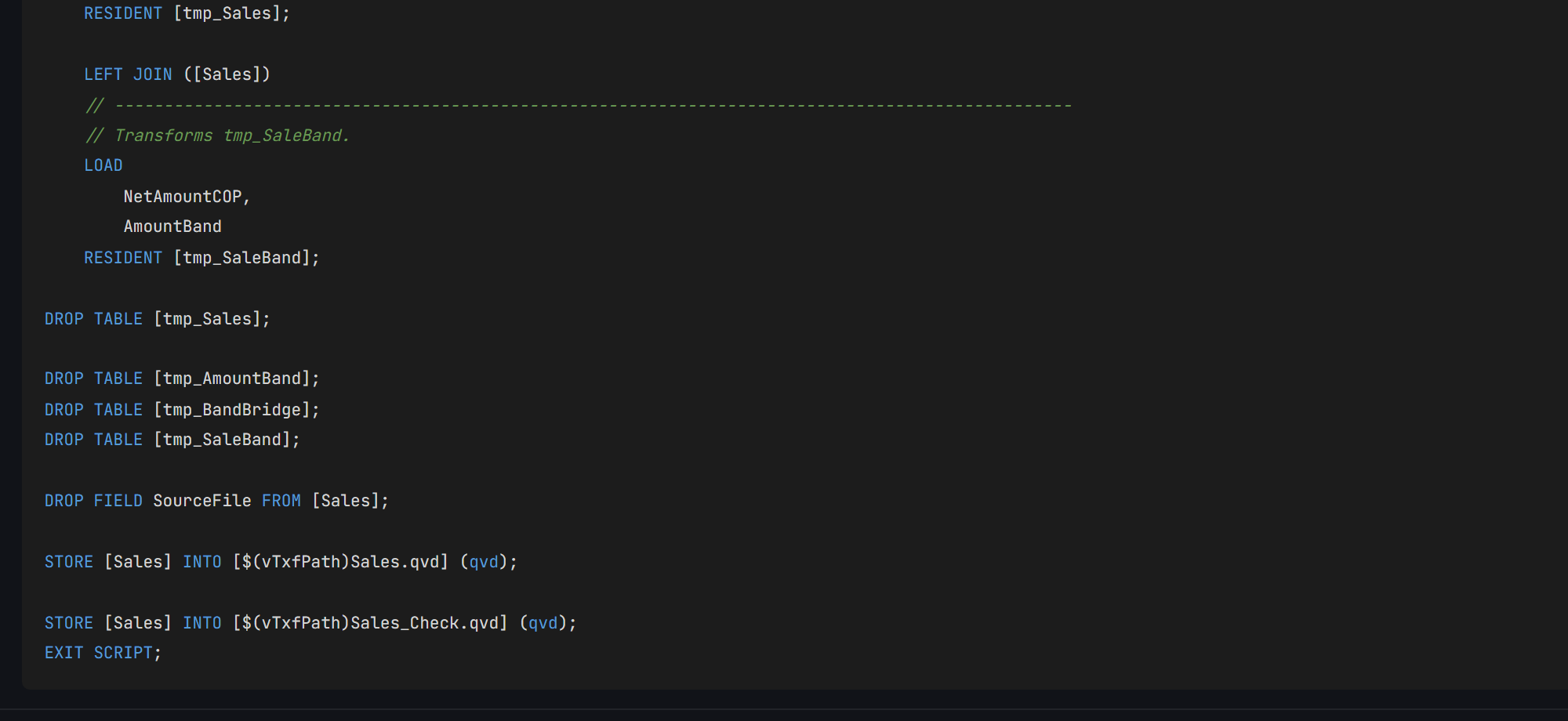
Figure 4.8 — Generate the script
04Check your result
- Run the script in Qlik. It stops at the debugging checkpoint, with
Transform/Sales.qvdandTransform/Sales_Check.qvdwritten. Saleshas 298 rows: 330 read, 8 with a quantity of zero or less left out by the WHERE, 24 of discontinued products left out by the INNER JOIN. 37 are in USD and carry aRate; the 261 in COP do not. 11 go to the unknown customer (-1).- Q-Expert splits the script into
_Main, the only part you paste into Qlik, and one.qvsfile per tab that_Mainreads withMUST_INCLUDE. All of them should match the ones below, except the date in the header and a// Q-Expert · Ref …line with your own reference.
_Main
Paste into QlikThis is the only script you paste into Qlik Sense: open the app's Data load editor, replace its content with this and reload. Each $(MUST_INCLUDE=…) line reads one of the files below in its place, so the rest of the model never goes into the editor.
Show script · 47 lines
/*----------------------------------------------------------------------------------------
	Description [MAIN]:

	-------------------------------------------------------------------------------------
	Author:	The Q-Fábrica team -
	Date:	[2026-11-02]
	-------------------------------------------------------------------------------------
	Changes
	-------------------------------------------------------------------------------------
	Author		Date		Detail
	-------------------------------------------------------------------------------------

	-------------------------------------------------------------------------------------
	Copyright © Q-Expert Distributors.
	Q-Expert Qlik Developer Framework. www.qfabrica.com
----------------------------------------------------------------------------------------*/

SET ThousandSep=',';
SET DecimalSep='.';
SET MoneyThousandSep=',';
SET MoneyDecimalSep='.';
SET MoneyFormat='$ #,##0.00;-$ #,##0.00';
SET TimeFormat='hh:mm:ss';
SET DateFormat='YYYY-MM-DD';
SET TimestampFormat='YYYY-MM-DD hh:mm:ss';
SET MonthNames='Jan;Feb;Mar;Apr;May;Jun;Jul;Aug;Sep;Oct;Nov;Dec';
SET LongMonthNames='January;February;March;April;May;June;July;August;September;October;November;December';
SET DayNames='Mon;Tue;Wed;Thu;Fri;Sat;Sun';
SET LongDayNames='Monday;Tuesday;Wednesday;Thursday;Friday;Saturday;Sunday';
SET FirstWeekDay=0;
SET BrokenWeeks=1;
SET ReferenceDay=4;
SET FirstMonthOfYear=1;

LET vExecutionDate = Timestamp(Now(), 'YYYY-MM-DD hh:mm:ss');

SET vTxfPath  = 'lib://QXDistributors/Transform/';
SET vPathRaw = 'lib://QXDistributors/';
SET vEnvironment = 'PROD';   // PROD, QA or DEV
SET vBaseCurrency = 'COP';   // Currency every amount is converted to
SET vPathModel = 'lib://QXDistributors/Model/';   // The model QVDs the apps load

$(MUST_INCLUDE=$(vTxfPath)_QVS/Flow_1.qvs);
$(MUST_INCLUDE=$(vTxfPath)_QVS/Flow_2.qvs);
$(MUST_INCLUDE=$(vTxfPath)_QVS/Flow_3.qvs);
$(MUST_INCLUDE=$(vTxfPath)_QVS/Flow_4.qvs);
$(MUST_INCLUDE=$(vTxfPath)_QVS/Sales.qvs);
Flow_1.qvs
File · read by MUST_INCLUDENot pasted: saved as a file. On the Flow_1 tab of Generate Syntax, Export downloads Flow_1.qvs (Deploy writes every tab into a folder at once). Put it in lib://QXDistributors/Transform/_QVS/Flow_1.qvs, the Transform/_QVS folder inside your QXDistributors folder. If the file is not there, the reload stops with an error: that is what MUST_INCLUDE is for.
Show script · 35 lines
/*----------------------------------------------------------------------------------------
	Description [Flow_1]:

	-------------------------------------------------------------------------------------
	Author:	The Q-Fábrica team -
	Date:	[2026-11-02]
	-------------------------------------------------------------------------------------
	Changes
	-------------------------------------------------------------------------------------
	Author		Date		Detail
	-------------------------------------------------------------------------------------

	-------------------------------------------------------------------------------------
	Copyright © Q-Expert Distributors.
	Q-Expert Qlik Developer Framework. www.qfabrica.com
----------------------------------------------------------------------------------------*/

// -------------------------------------------------------------------------------------------------
// Table defined directly in the script (2 columns).
[map_DocType_Src]:
    LOAD * INLINE [
    "DocType", "DocTypeName"
    "NIT", "Company"
    "CC", "Person"
    ];

// -------------------------------------------------------------------------------------------------
// Mapping table (DocType → DocTypeName) from map_DocType_Src, for ApplyMap.
[map_DocType]:
    MAPPING LOAD
        DocType,
        DocTypeName
    RESIDENT [map_DocType_Src];

DROP TABLE [map_DocType_Src];
Flow_2.qvs
File · read by MUST_INCLUDENot pasted: saved as a file. On the Flow_2 tab of Generate Syntax, Export downloads Flow_2.qvs (Deploy writes every tab into a folder at once). Put it in lib://QXDistributors/Transform/_QVS/Flow_2.qvs, the Transform/_QVS folder inside your QXDistributors folder. If the file is not there, the reload stops with an error: that is what MUST_INCLUDE is for.
Show script · 36 lines
/*----------------------------------------------------------------------------------------
	Description [Flow_2]:

	-------------------------------------------------------------------------------------
	Author:	The Q-Fábrica team -
	Date:	[2026-11-02]
	-------------------------------------------------------------------------------------
	Changes
	-------------------------------------------------------------------------------------
	Author		Date		Detail
	-------------------------------------------------------------------------------------

	-------------------------------------------------------------------------------------
	Copyright © Q-Expert Distributors.
	Q-Expert Qlik Developer Framework. www.qfabrica.com
----------------------------------------------------------------------------------------*/

// -------------------------------------------------------------------------------------------------
// Table defined directly in the script (2 columns).
[map_CustomerStatus_Src]:
    LOAD * INLINE [
    "Status", "CustomerStatus"
    "A", "Active"
    "I", "Inactive"
    "B", "Blocked"
    ];

// -------------------------------------------------------------------------------------------------
// Mapping table (Status → CustomerStatus) from map_CustomerStatus_Src, for ApplyMap.
[map_CustomerStatus]:
    MAPPING LOAD
        Status,
        CustomerStatus
    RESIDENT [map_CustomerStatus_Src];

DROP TABLE [map_CustomerStatus_Src];
Flow_3.qvs
File · read by MUST_INCLUDENot pasted: saved as a file. On the Flow_3 tab of Generate Syntax, Export downloads Flow_3.qvs (Deploy writes every tab into a folder at once). Put it in lib://QXDistributors/Transform/_QVS/Flow_3.qvs, the Transform/_QVS folder inside your QXDistributors folder. If the file is not there, the reload stops with an error: that is what MUST_INCLUDE is for.
Show script · 36 lines
/*----------------------------------------------------------------------------------------
	Description [Flow_3]:

	-------------------------------------------------------------------------------------
	Author:	The Q-Fábrica team -
	Date:	[2026-11-02]
	-------------------------------------------------------------------------------------
	Changes
	-------------------------------------------------------------------------------------
	Author		Date		Detail
	-------------------------------------------------------------------------------------

	-------------------------------------------------------------------------------------
	Copyright © Q-Expert Distributors.
	Q-Expert Qlik Developer Framework. www.qfabrica.com
----------------------------------------------------------------------------------------*/

// -------------------------------------------------------------------------------------------------
// Table defined directly in the script (2 columns).
[map_ChannelName_Src]:
    LOAD * INLINE [
    "Channel", "ChannelName"
    "P", "Phone"
    "T", "In store"
    "W", "Web"
    ];

// -------------------------------------------------------------------------------------------------
// Mapping table (Channel → ChannelName) from map_ChannelName_Src, for ApplyMap.
[map_ChannelName]:
    MAPPING LOAD
        Channel,
        ChannelName
    RESIDENT [map_ChannelName_Src];

DROP TABLE [map_ChannelName_Src];
Flow_4.qvs
File · read by MUST_INCLUDENot pasted: saved as a file. On the Flow_4 tab of Generate Syntax, Export downloads Flow_4.qvs (Deploy writes every tab into a folder at once). Put it in lib://QXDistributors/Transform/_QVS/Flow_4.qvs, the Transform/_QVS folder inside your QXDistributors folder. If the file is not there, the reload stops with an error: that is what MUST_INCLUDE is for.
Show script · 24 lines
/*----------------------------------------------------------------------------------------
	Description [Flow_4]:

	-------------------------------------------------------------------------------------
	Author:	The Q-Fábrica team -
	Date:	[2026-11-02]
	-------------------------------------------------------------------------------------
	Changes
	-------------------------------------------------------------------------------------
	Author		Date		Detail
	-------------------------------------------------------------------------------------

	-------------------------------------------------------------------------------------
	Copyright © Q-Expert Distributors.
	Q-Expert Qlik Developer Framework. www.qfabrica.com
----------------------------------------------------------------------------------------*/

// -------------------------------------------------------------------------------------------------
// Mapping table (BrandID → BrandName) from $(vPathRaw)Brands.txt, for ApplyMap.
[map_BrandName]:
    MAPPING LOAD
        BrandID,
        BrandName
    FROM [$(vPathRaw)Brands.txt] (txt, utf8, delimiter is '|', embedded labels, msq);
Sales.qvs
File · read by MUST_INCLUDENot pasted: saved as a file. On the Sales tab of Generate Syntax, Export downloads Sales.qvs (Deploy writes every tab into a folder at once). Put it in lib://QXDistributors/Transform/_QVS/Sales.qvs, the Transform/_QVS folder inside your QXDistributors folder. If the file is not there, the reload stops with an error: that is what MUST_INCLUDE is for.
Show script · 421 lines
/*----------------------------------------------------------------------------------------
	Description [Sales]:

	-------------------------------------------------------------------------------------
	Author:	The Q-Fábrica team -
	Date:	[2026-11-02]
	-------------------------------------------------------------------------------------
	Changes
	-------------------------------------------------------------------------------------
	Author		Date		Detail
	-------------------------------------------------------------------------------------

	-------------------------------------------------------------------------------------
	Copyright © Q-Expert Distributors.
	Q-Expert Qlik Developer Framework. www.qfabrica.com
----------------------------------------------------------------------------------------*/

// -------------------------------------------------------------------------------------------------
// Empty table with 1 column (WHERE 1=0), schema only.
[tmp_SalesRaw]:
    LOAD * INLINE [
    "Dummy"
    ] WHERE 1=0;

// -------------------------------------------------------------------------------------------------
// Loop FOR EACH … IN FileList() over $(vFile).
FOR EACH vFile IN FileList('$(vPathRaw)Sales_*.csv')

    // -------------------------------------------------------------------------------------------------
    // Raw load from $(vFile), concatenated into [tmp_SalesRaw].
    CONCATENATE ([tmp_SalesRaw])
    LOAD
        SaleID,
        SaleDate,
        CustomerID,
        ProductID,
        SalespersonID,
        BranchID,
        Quantity,
        UnitPrice,
        DiscountPct,
        Currency,
        Channel,
        FileName()                                                                       AS SourceFile
    FROM [$(vFile)] (txt, utf8, delimiter is ',', embedded labels, msq);

NEXT vFile;

DROP FIELD Dummy FROM [tmp_SalesRaw];

LET vSalesRawRows = NoOfRows('tmp_SalesRaw');

TRACE Sales rows read from the monthly files: $(vSalesRawRows);

// -------------------------------------------------------------------------------------------------
// Raw load of tmp_Parameter (no source set yet).
[tmp_Parameter]:
    LOAD
        Parameter,
        Value
    FROM [$(vPathRaw)Parameters.txt] (txt, utf8, delimiter is '	', embedded labels, msq);

LET vCreditThreshold = Lookup('Value', 'Parameter', 'CreditThreshold', 'tmp_Parameter');

DROP TABLE [tmp_Parameter];

// -------------------------------------------------------------------------------------------------
// Mapping table (Num(Date#(HolidayDate, 'YYYY-MM-DD')) AS HolidayDate → HolidayName) from $(vPathRaw)Holidays.csv, for ApplyMap.
[map_Holiday]:
    MAPPING LOAD DISTINCT
        Num(Date#(HolidayDate, 'YYYY-MM-DD')) AS HolidayDate,
        HolidayName
    FROM [$(vPathRaw)Holidays.csv] (txt, utf8, delimiter is ',', embedded labels, msq);

QUALIFY *;

UNQUALIFY CustomerID, ProductID, SalespersonID, BranchID, CategoryID, BrandID, DocNumber;

// -------------------------------------------------------------------------------------------------
// Raw load of tmp_CustomerRaw (no source set yet).
[tmp_CustomerRaw]:
    LOAD
        CustomerID,
        CustomerName,
        DocType,
        DocNumber,
        City,
        Segment,
        SignupDate,
        Status,
        CreditLimit
    FROM [$(vPathRaw)Customers.csv] (txt, utf8, delimiter is ',', embedded labels, msq);

// -------------------------------------------------------------------------------------------------
// Raw load of tmp_ProductRaw (no source set yet).
[tmp_ProductRaw]:
    LOAD
        ProductID,
        SKU,
        ProductName,
        CategoryID,
        BrandID,
        ListPrice,
        UnitCost,
        UnitOfMeasure,
        Status
    FROM [$(vPathRaw)Products.csv] (txt, utf8, delimiter is ',', embedded labels, msq);

// -------------------------------------------------------------------------------------------------
// Raw load of tmp_SalespersonRaw (no source set yet).
[tmp_SalespersonRaw]:
    LOAD
        SalespersonID,
        SalespersonName,
        BranchID,
        HireDate,
        MonthlyTarget
    FROM [$(vPathRaw)Salespeople.csv] (txt, utf8, delimiter is ',', embedded labels, msq);

// -------------------------------------------------------------------------------------------------
// Raw load of tmp_BranchRaw (no source set yet).
[tmp_BranchRaw]:
    LOAD
        BranchID,
        BranchName,
        Region,
        City,
        Format
    FROM [$(vPathRaw)Branches.csv] (txt, utf8, delimiter is ',', embedded labels, msq);

// -------------------------------------------------------------------------------------------------
// Raw load of tmp_CategoryRaw (no source set yet).
[tmp_CategoryRaw]:
    LOAD
        CategoryID,
        CategoryName,
        Family
    FROM [$(vPathRaw)Categories.csv] (txt, utf8, delimiter is ',', embedded labels, msq);

UNQUALIFY *;

// -------------------------------------------------------------------------------------------------
// Raw load of tmp_BrandRaw (no source set yet).
[tmp_BrandRaw]:
    LOAD
        BrandID,
        BrandName,
        CountryOfOrigin
    FROM [$(vPathRaw)Brands.txt] (txt, utf8, delimiter is '|', embedded labels, msq);

// -------------------------------------------------------------------------------------------------
// Transforms tmp_CustomerRaw.
[tmp_CustomerClean]:
    LOAD
        CustomerID,
        DocNumber,
        [tmp_CustomerRaw.Segment]                                                        AS Segment,
        [tmp_CustomerRaw.CreditLimit]                                                    AS CreditLimit,
        Capitalize(Trim(tmp_CustomerRaw.CustomerName))                                   AS CustomerName,
        ApplyMap('map_DocType', tmp_CustomerRaw.DocType, 'Other')                        AS DocTypeName,
        If(Len(Trim(tmp_CustomerRaw.City)) = 0, 'No city', Trim(tmp_CustomerRaw.City))   AS CustomerCity,
        Date(Date#(tmp_CustomerRaw.SignupDate, 'DD/MM/YYYY'))                            AS SignupDate,
        ApplyMap('map_CustomerStatus', tmp_CustomerRaw.Status, 'Unknown')                AS CustomerStatus,
        If(tmp_CustomerRaw.CreditLimit >= $(vCreditThreshold), 'High', 'Standard')       AS CreditProfile,
        If(DocNumber = Previous(DocNumber), Peek('SurvivorID'), CustomerID)              AS SurvivorID
    RESIDENT [tmp_CustomerRaw]
    ORDER BY DocNumber, CustomerID;

// -------------------------------------------------------------------------------------------------
// Mapping table (CustomerID → SurvivorID) from tmp_CustomerClean, for ApplyMap.
[map_CustomerSurvivor]:
    MAPPING LOAD
        CustomerID,
        SurvivorID
    RESIDENT [tmp_CustomerClean];

// -------------------------------------------------------------------------------------------------
// Transforms tmp_CustomerClean, combined via CONCATENATE.
[Customer]:
    NOCONCATENATE
    LOAD
        CustomerID,
        DocNumber,
        Segment,
        CreditLimit,
        CustomerName,
        DocTypeName,
        CustomerCity,
        SignupDate,
        CustomerStatus,
        CreditProfile
    RESIDENT [tmp_CustomerClean]
    WHERE CustomerID = SurvivorID;

    CONCATENATE ([Customer])
    // -------------------------------------------------------------------------------------------------
    // Table defined directly in the script (3 columns).
    LOAD * INLINE [
    "CustomerID", "CustomerName", "CustomerStatus"
    "-1", "Unknown customer", "Unknown"
    ];

DROP TABLE [tmp_CustomerClean];

// -------------------------------------------------------------------------------------------------
// Transforms tmp_ProductRaw, combined via LEFT JOIN.
[Product]:
    LOAD
        ProductID,
        [tmp_ProductRaw.SKU]                                                             AS SKU,
        CategoryID,
        BrandID,
        [tmp_ProductRaw.ListPrice]                                                       AS ListPrice,
        [tmp_ProductRaw.UnitCost]                                                        AS UnitCost,
        [tmp_ProductRaw.UnitOfMeasure]                                                   AS UnitOfMeasure,
        Capitalize(Trim(tmp_ProductRaw.ProductName))                                     AS ProductName,
        ApplyMap('map_BrandName', BrandID, 'No brand')                                   AS BrandName,
        Round(
            (tmp_ProductRaw.ListPrice - tmp_ProductRaw.UnitCost) / tmp_ProductRaw.ListPrice,
            0.0001
        )                                                                                AS MarginPct
    RESIDENT [tmp_ProductRaw]
    WHERE tmp_ProductRaw.Status = 'ACTIVE';

    LEFT JOIN ([Product])
    // -------------------------------------------------------------------------------------------------
    // Transforms tmp_CategoryRaw.
    LOAD DISTINCT
        CategoryID,
        [tmp_CategoryRaw.CategoryName]                                                   AS CategoryName,
        [tmp_CategoryRaw.Family]                                                         AS Family
    RESIDENT [tmp_CategoryRaw];

    LEFT JOIN ([Product])
    // -------------------------------------------------------------------------------------------------
    // Transforms tmp_BrandRaw.
    LOAD
        BrandID,
        CountryOfOrigin
    RESIDENT [tmp_BrandRaw];

// -------------------------------------------------------------------------------------------------
// Transforms tmp_SalespersonRaw, combined via LEFT JOIN.
[Salesperson]:
    LEFT KEEP ([tmp_SalesRaw])
    LOAD
        SalespersonID,
        BranchID                                                                         AS HomeBranchID,
        [tmp_SalespersonRaw.MonthlyTarget]                                               AS MonthlyTarget,
        Capitalize(Trim(tmp_SalespersonRaw.SalespersonName))                             AS SalespersonName,
        Date(Date#(tmp_SalespersonRaw.HireDate, 'YYYY-MM-DD'))                           AS HireDate
    RESIDENT [tmp_SalespersonRaw];

// -------------------------------------------------------------------------------------------------
// Transforms tmp_BranchRaw.
[Branch]:
    LOAD
        BranchID,
        [tmp_BranchRaw.BranchName]                                                       AS BranchName,
        [tmp_BranchRaw.Region]                                                           AS Region,
        [tmp_BranchRaw.City]                                                             AS BranchCity,
        [tmp_BranchRaw.Format]                                                           AS BranchFormat
    RESIDENT [tmp_BranchRaw];

DROP TABLE [tmp_BranchRaw];
DROP TABLE [tmp_BrandRaw];
DROP TABLE [tmp_CategoryRaw];
DROP TABLE [tmp_CustomerRaw];
DROP TABLE [tmp_ProductRaw];
DROP TABLE [tmp_SalespersonRaw];

// -------------------------------------------------------------------------------------------------
// Raw load of tmp_ExchangeRate (no source set yet).
[tmp_ExchangeRate]:
    LOAD
        Currency,
        Rate,
        Date#(ValidFromDate, 'YYYY-MM-DD')                                               AS ValidFromDate,
        Date#(ValidToDate, 'YYYY-MM-DD')                                                 AS ValidToDate
    FROM [$(vPathRaw)ExchangeRates.csv] (txt, utf8, delimiter is ',', embedded labels, msq);

// -------------------------------------------------------------------------------------------------
// Associates SaleDate with the range [ValidFromDate, ValidToDate] from tmp_ExchangeRate.
[tmp_RateBridge]:
    INTERVALMATCH (SaleDate, Currency)
    LOAD
      ValidFromDate,
      ValidToDate,
      Currency
    RESIDENT [tmp_ExchangeRate];

// -------------------------------------------------------------------------------------------------
// Transforms tmp_RateBridge, combined via LEFT JOIN.
[tmp_SaleRate]:
    NOCONCATENATE
    LOAD
        SaleDate,
        ValidFromDate,
        ValidToDate,
        Currency
    RESIDENT [tmp_RateBridge];

    LEFT JOIN ([tmp_SaleRate])
    // -------------------------------------------------------------------------------------------------
    // Transforms tmp_ExchangeRate.
    LOAD
        Currency,
        Rate,
        ValidFromDate,
        ValidToDate
    RESIDENT [tmp_ExchangeRate];

// -------------------------------------------------------------------------------------------------
// Transforms tmp_SalesRaw, combined via INNER JOIN.
[tmp_Sales]:
    LOAD
        SaleID,
        ProductID,
        SalespersonID,
        BranchID,
        Quantity,
        UnitPrice,
        DiscountPct,
        Currency,
        SourceFile,
        Date(Date#(SaleDate, 'YYYY-MM-DD'))                                              AS SaleDate,
        ApplyMap('map_CustomerSurvivor', CustomerID, -1)                                 AS CustomerID,
        ApplyMap('map_ChannelName', Channel, 'Other')                                    AS ChannelName,
        Quantity * UnitPrice * (1 - DiscountPct / 100)                                   AS NetAmount
    RESIDENT [tmp_SalesRaw]
    WHERE Quantity > 0;

    INNER JOIN ([tmp_Sales])
    // -------------------------------------------------------------------------------------------------
    // Transforms Product.
    LOAD
        ProductID
    RESIDENT [Product];

    LEFT JOIN ([tmp_Sales])
    // -------------------------------------------------------------------------------------------------
    // Transforms tmp_SaleRate.
    LOAD
        SaleDate,
        Currency,
        Rate
    RESIDENT [tmp_SaleRate]
    WHERE Currency <> '$(vBaseCurrency)';

DROP TABLE [tmp_SalesRaw];

DROP TABLE [tmp_ExchangeRate];
DROP TABLE [tmp_RateBridge];
DROP TABLE [tmp_SaleRate];

// -------------------------------------------------------------------------------------------------
// Raw load of tmp_AmountBand (no source set yet).
[tmp_AmountBand]:
    LOAD
        FromAmount,
        ToAmount,
        Band                                                                             AS AmountBand
    FROM [$(vPathRaw)AmountBands.csv] (txt, utf8, delimiter is ',', embedded labels, msq);

// -------------------------------------------------------------------------------------------------
// Associates NetAmountCOP with the range [FromAmount, ToAmount] from tmp_AmountBand.
[tmp_BandBridge]:
    INTERVALMATCH (NetAmountCOP)
    LOAD
      FromAmount,
      ToAmount
    RESIDENT [tmp_AmountBand];

// -------------------------------------------------------------------------------------------------
// Transforms tmp_BandBridge, combined via LEFT JOIN.
[tmp_SaleBand]:
    NOCONCATENATE
    LOAD
        NetAmountCOP,
        FromAmount,
        ToAmount
    RESIDENT [tmp_BandBridge];

    LEFT JOIN ([tmp_SaleBand])
    // -------------------------------------------------------------------------------------------------
    // Transforms tmp_AmountBand.
    LOAD
        FromAmount,
        ToAmount,
        AmountBand
    RESIDENT [tmp_AmountBand];

// -------------------------------------------------------------------------------------------------
// Transforms tmp_Sales, combined via LEFT JOIN.
[Sales]:
    NOCONCATENATE
    LOAD
        *,
        Round(NetAmount * Alt(Rate, 1))                                                  AS NetAmountCOP
    RESIDENT [tmp_Sales];

    LEFT JOIN ([Sales])
    // -------------------------------------------------------------------------------------------------
    // Transforms tmp_SaleBand.
    LOAD
        NetAmountCOP,
        AmountBand
    RESIDENT [tmp_SaleBand];

DROP TABLE [tmp_Sales];

DROP TABLE [tmp_AmountBand];
DROP TABLE [tmp_BandBridge];
DROP TABLE [tmp_SaleBand];

DROP FIELD SourceFile FROM [Sales];

STORE [Sales] INTO [$(vTxfPath)Sales.qvd] (qvd);

STORE [Sales] INTO [$(vTxfPath)Sales_Check.qvd] (qvd);
EXIT SCRIPT;
05Why this way
- IntervalMatch with a key. The rate depends on the date and on the currency. Adding
Currencyas a key makes each sale match only its own currency's ranges. - A bridge, then a join. The bridge table says which range each sale falls in; the rate itself comes in with a join. Keeping the steps apart keeps each one checkable.
- The base currency in a variable.
$(vBaseCurrency)decides which sales need a rate. Another company in another country changes one project variable. - Transform stores the clean table.
Sales.qvdin Transform is what the model reads in episode 6; the second store is only for debugging and goes away.
06What comes next
Episode 5: budget against actual, net of returns.
Before you model
Q-Explorator is the Q-Fábrica team's desktop tool to explore QVD, CSV, Excel and Parquet files and to convert CSV, TXT and Excel files into QVD. Open the files of each episode in it to see their content and quality first.
About Q-Explorator